The mystery of Amelia Earhart’s disappearance is still a mystery, but researchers at Purdue University say they aren’t giving up.
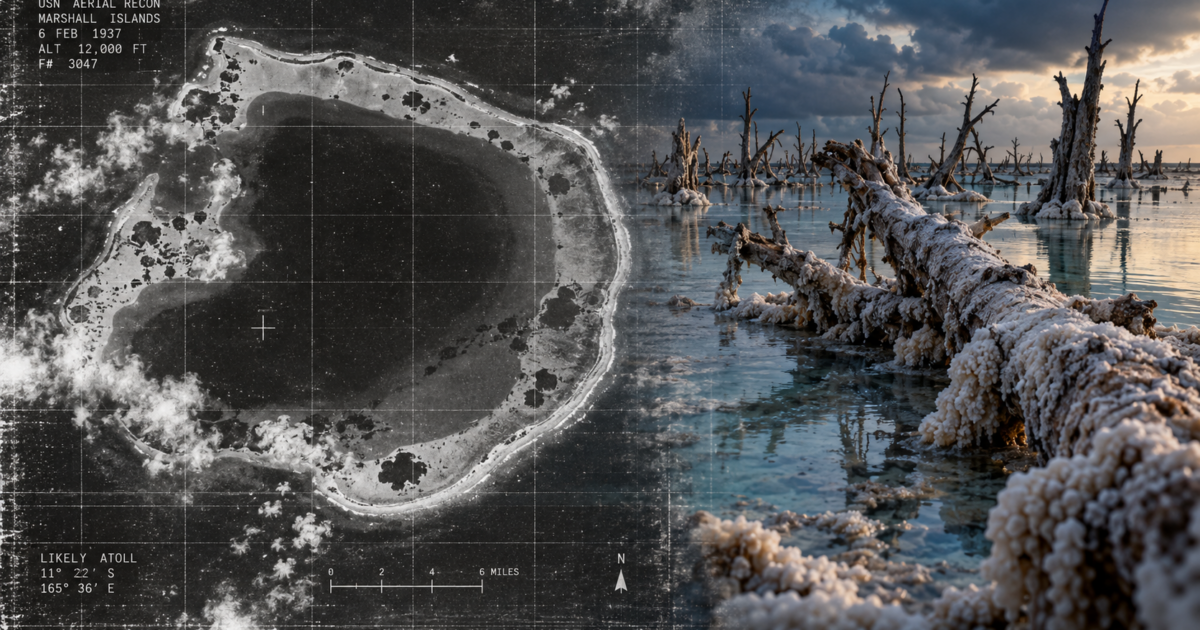
A 17-person expedition to Nikumaroro in the South Pacific has determined that the mysterious Taraia Object, believed by some to be wreckage from Earhart’s Lockheed Electra 10-E, was likely just a collection of large trees that had accumulated along the island’s shoreline.
As previously covered, researchers recently traveled to the remote island hoping to solve the mystery of Earhart’s 1937 disappearance.
The object was first spotted in satellite imagery in 2020, but when researchers arrived at the location, they discovered that much of it had fragmented and washed away. Only a Y-shaped section remained, which researchers say had a reflective carbonate coating that caused the object to appear metallic in satellite imagery.
Purdue University released a statement on Sunday detailing the expedition’s findings and reaffirming its commitment to continuing the search.
Rick Pettigrew, ALI’s executive director said:
“Amelia Earhart’s spirit of courage and curiosity drove every step of the search.”
“We accomplished our goal to determine what the Taraia Object was, and we’re deeply grateful to the private donors who shared our vision and made this journey possible. Our team remains in great spirits and proud of what was accomplished.”
Steve Schultz, Purdue general counsel and expedition member said:
“Perhaps no words better capture this expedition than Amelia Earhart’s own: ‘Adventure is worthwhile in itself.’”
“We set out to test a hypothesis, not to guarantee a particular result, and we followed the evidence to the end. While the Taraia Object did not prove to be what we hoped, the journey produced new discoveries, added to the world’s knowledge of Nikumaroro, and wrote another extraordinary chapter in a story of discovery and exploration.”
Although the team did not locate Earhart’s plane, researchers remain committed to investigating the theory that Earhart and navigator Fred Noonan landed on Nikumaroro after disappearing on July 2, 1937.
Purdue has also pledged to continue its search for answers.
“She kept flying, and we will keep searching,” Schultz said.