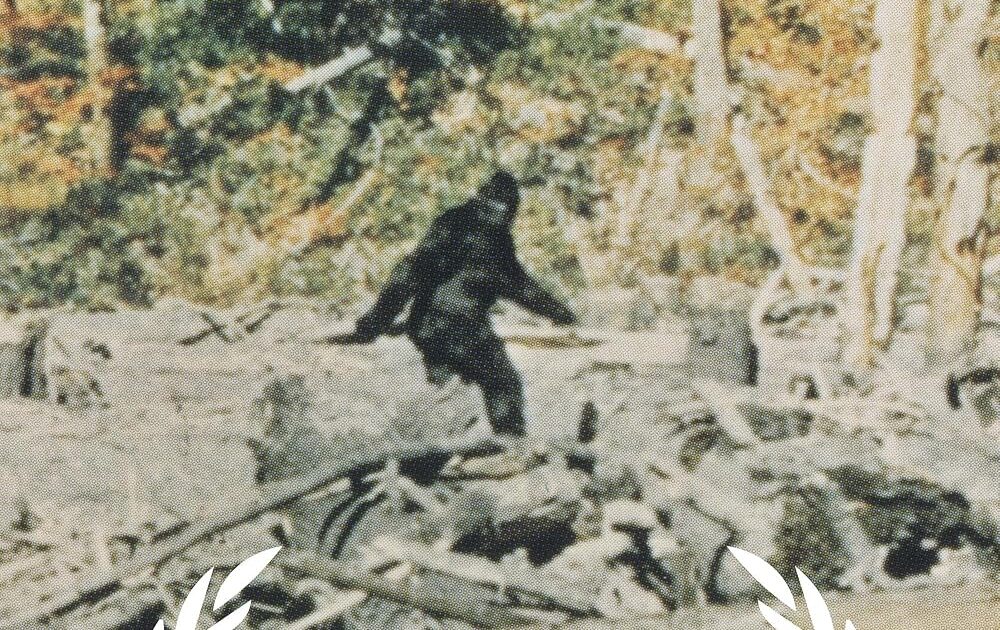
I can’t remember the last time I was so excited to see a documentary release.
Nearly 60 years after Roger Patterson and Bob Gimlin filmed what became the most famous images in Bigfoot history, Capturing Bigfoot, directed by Marq Evans, debuts on Prime Video in the United States and Canada on October 20, 2026. There will be select theatrical screenings including in New York and Los Angeles beginning the same day. The date is significant: October 20 marks the 59th anniversary of when the Patterson-Gimlin film was first shot (allegedly — there are timeline discrepancies).
One week earlier, the film will play at the Portland Art Museum with a pre-release screening panel featuring Evans and Roger’s son Clint Patterson. I’m going to do everything in my power to make it there.
The documentary centers on a reel of 16mm film allegedly discovered decades after the original encounter. According to the filmmakers, Teresa Brooks found the reel in a locked safe belonging to her late father, Norm Johnson, who had worked in a Boeing film laboratory and had connections to people involved with the Patterson-Gimlin story. When Evans examined the material, he found approximately 40 seconds of footage that appears to show a person in a Bigfoot costume that looks shockingly like whatever is in the original film walking through a wooded landscape — an alleged REHEARSAL. The film stock is said to date to 1966 — the year before Patterson and Gimlin made their film.
Of course, the biggest question among Bigfoot researchers is whether this is a rehearsal or, perhaps, an attempted re-enactment that was filmed AFTER the legitimate encounter, but on film stock that was sold BEFORE the encounter (we only know when the film was sold, not when the image was put on the film).
The documentary also goes beyond the film itself, examining Patterson, his family, longtime disputes surrounding the footage, and the people who have spent decades arguing over whether the creature was real or a man in a suit. Roger Patterson’s son, Clint, participates in the film, along with Bob Gimlin (the Gimlin in Patterson-Gimlin, who is still alive today in his 90s) and researchers and writers including the late Jeff Meldrum (who makes one of his final appearances in the film), Bill Munns and Greg Long.
For anyone familiar with Long’s 2004 book The Making of Bigfoot: The Inside Story (a fantastic book which I’ve almost finished reading), the documentary’s approach will sound familiar. Long spent years investigating the people surrounding Patterson and the 1967 film, using interviews, newspaper archives and court records. His book devotes considerable attention to the alleged costume, the claims of Bob Heironimus — who said he wore the Bigfoot suit, and does, in fact, walk EXACTLY like whatever is in the film — and the personalities and disputes surrounding Patterson’s project. Long allegedly appears in Capturing Bigfoot and is apparently overjoyed to have finally been, in his mind, vindicated (many Bigfoot researchers have hated him and his book for two decades).
The original story began on October 20, 1967, when Patterson and Gimlin were riding horses along Bluff Creek in Northern California. Patterson had been pursuing Bigfoot for years and was working on a film project about it (which some would say was quite convenient). He claimed that he and Gimlin unexpectedly encountered a large, hairy, humanlike figure (with large breasts, so it was a female) and that he managed to capture roughly a minute of 16mm footage as it walked away. The figure — eventually nicknamed “Patty” after Roger’s wife — briefly turned toward the camera, creating the iconic image that remains one of the most famous shots in the history of cryptozoology.
Skeptics have long argued that Patty was a person (likely Heronimous) wearing a costume, while bigfoot believers claim the figure’s unnatural proportions, movement and apparent musculature as evidence against a costume. Munns, who worked in Hollywood during the 60s and helped with films involving ape costumes such as 2001, a Space Odyssey, long claimed that nobody — particularly just a poor cowboy from Yakima like Patterson — could absolutely not be able to create a suit like that, and if he could, he’d have made millions in Hollywood. Patterson never had a chance one way or another, dying of cancer in the early 70s. He swore to his grave the film was real.
Those who have seen the film claim that it puts to rest this mystery once and for all, that when it’s over there is no doubt whatsoever that the Patterson-Gimlin film was a hoax. In about a month we’ll be able to determine that for ourselves. There are some long-time believers who are keeping an open mind, and who believe that it’s possible the most famous Bigfoot film of all time is fake. They note, however, that real or fake, it won’t ultimately disprove whether or not Bigfoot actually exists.
Check the archives for dozens and dozens of shows on Bigfoot, Dogman and other creepy things in the woods, including interviews years back with Jeff Meldrum himself. Subscribe today!